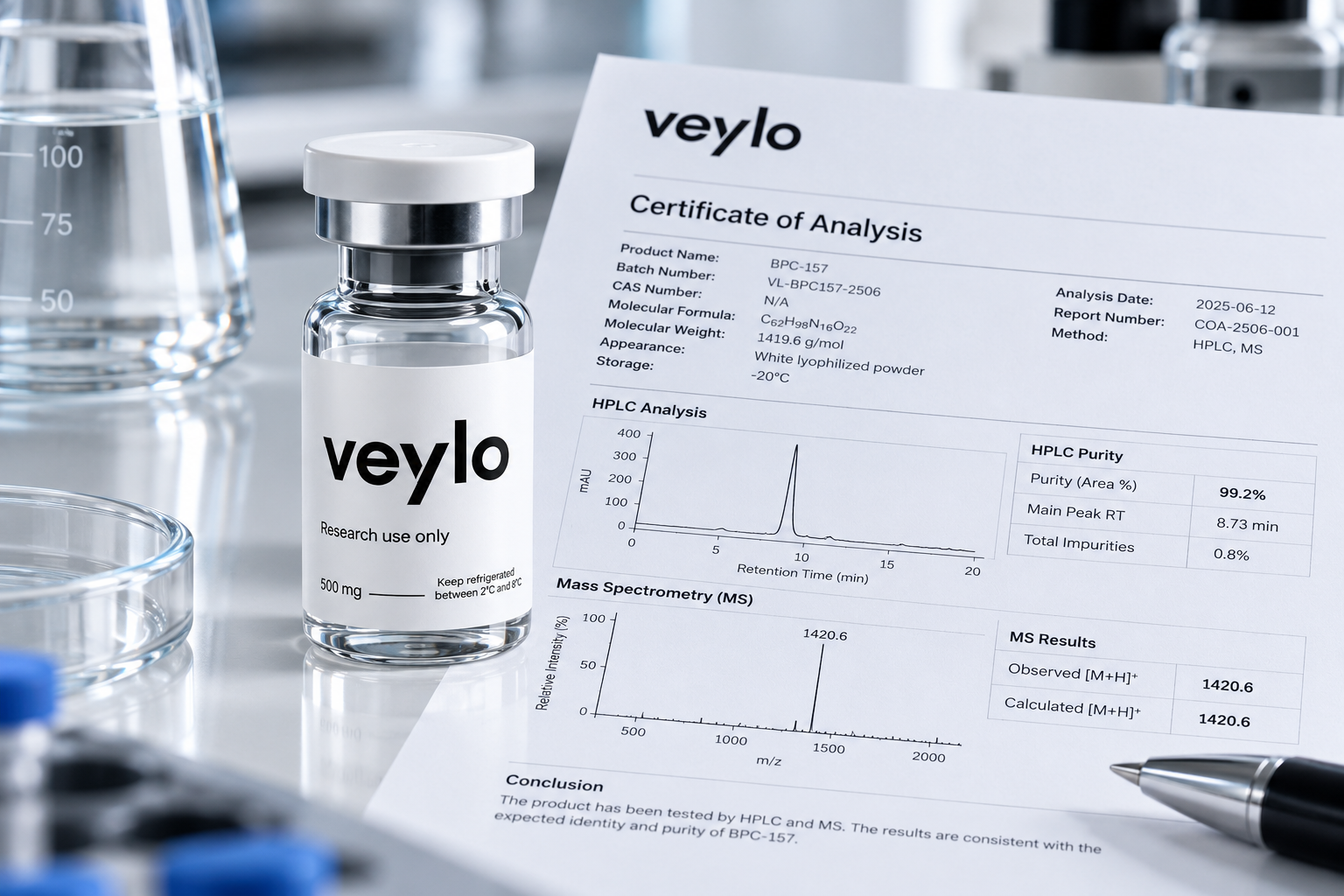
A Certificate of Analysis (COA) is an important document in laboratory research. It details the analytical testing performed on a specific material and helps researchers evaluate its reported characteristics.
For research peptides, a COA may include information about molecular identity, purity, analytical methods, and batch-specific testing results.
However, not every Certificate of Analysis contains the same information, and understanding how to interpret the reported data is essential.
This guide explains the key components of a peptide COA, common analytical terminology, and the factors researchers should consider when reviewing laboratory documentation.
What Is a Certificate of Analysis?
A Certificate of Analysis is a document that summarises the results of specified analytical tests performed on a material or product batch.
In peptide research, these documents commonly communicate testing results for a particular peptide sample.
Depending on the testing program, a COA may contain:
- Peptide name or identification
- Batch or lot number
- Molecular formula and molecular weight
- Reported purity percentage
- Analytical testing methods
- Chromatographic or mass spectrometric results
- Testing laboratory information
- Analysis date and documented findings
A COA provides evidence of the tests reported in the document. It does not automatically establish every characteristic of the material or guarantee its suitability for a particular research application.
Why Are COAs Important in Peptide Research?
Peptide research often involves experiments where sample composition can affect result interpretation.
Unexpected impurities, incorrect molecular identity, or batch-to-batch variation can introduce uncertainty into experimental findings.
Analytical documentation helps researchers evaluate the materials used in their investigations.
A well-documented COA supports material traceability, quality assessment, and more consistent laboratory research.
However, a COA’s usefulness depends on the relevance of the testing methods, the reliability of the analytical data, and whether the document accurately reflects the material being evaluated.
Understanding the Key Sections of a Peptide COA
Although Certificate of Analysis formats vary, several sections commonly appear in peptide testing documentation.
1. Product Identification
The identification section describes the material associated with the analytical report.
It may include the peptide name, molecular formula, molecular weight, and other identifying information.
Researchers should verify that these details are consistent with the intended research compound.
For peptides with similar names or closely related molecular structures, accurate identification is particularly important.
2. Batch or Lot Number
A batch number identifies a speci